Android Volume Control Explained: Media, Ringtone & More
Android has several separate volume streams that often confuse people. Here's a clear guide to what each one does — and how to take control of them.
SoundAlert Editorial Team
SoundAlert
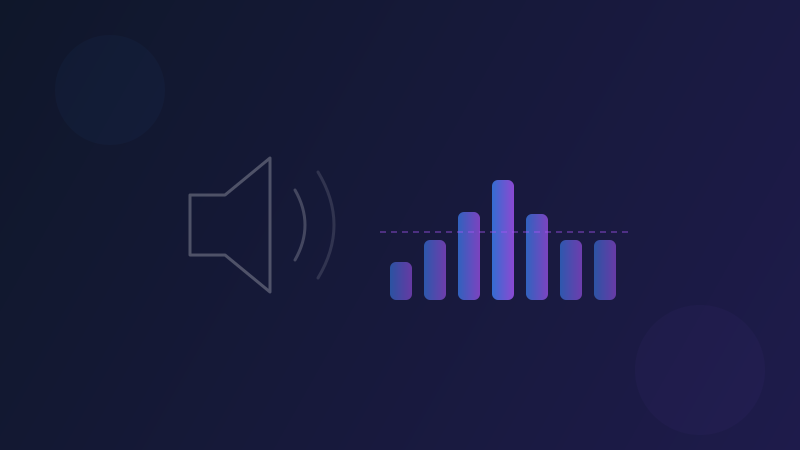
Android's volume system is more layered than most people realise. You press the side button, a slider appears — but that slider only controls one of several independent volume streams your phone manages at the same time. Understanding how Android volume control actually works makes it much easier to fix those moments when an app blasts audio unexpectedly, a notification chimes at the wrong time, or a video starts roaring in a quiet room.
Why Android Has Multiple Volume Streams
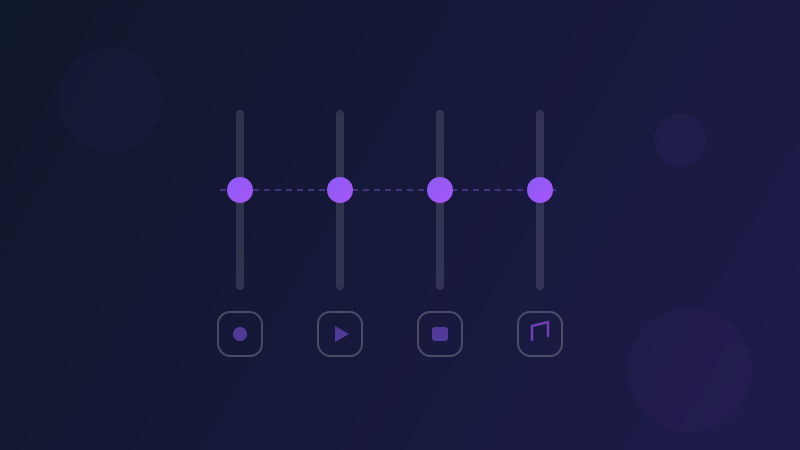
Most phones treat each type of audio as its own channel with its own level. That means adjusting one does not touch the others. The main streams you'll encounter are:
- •Media volume — music, videos, podcasts, browsers, social apps, games
- •Ringtone volume — incoming call ringtones
- •Notification volume — message pings, email alerts, app notifications
- •Alarm volume — the clock app and most third-party alarm apps
- •Call volume — the audio you hear during a phone or video call (only adjustable while a call is active)
Each of these can sit at a completely different level. That's why your ringtone can be loud while your music is quiet, or why your alarm can go off at full blast even after you've turned media volume right down the night before. It's also why the physical volume buttons behave differently depending on what's happening on screen.
What the Volume Buttons Actually Change
When no media is playing, pressing the side volume buttons usually adjusts the ringtone level on most Android phones — though some manufacturers default to media volume instead. When media is actively playing, the buttons switch to controlling media volume. This context-sensitive behaviour catches many people off guard, especially when they press the buttons expecting to lower a ringer and accidentally send media volume to zero instead. Menu names and default behaviours vary by phone brand and Android version, so it's worth checking your phone's sound settings to see what yours defaults to.
Media Volume: The Stream That Causes Most Surprises
Media volume is the stream that governs almost everything you choose to listen to or watch — YouTube, TikTok, Spotify, Instagram Reels, podcast apps, web browsers, most games. It is also the stream most likely to catch you off guard, because apps often launch with whatever level was set last time, or they apply their own internal boost on top of the system setting.
If you've ever opened a social app in a quiet room and been startled by a video playing loudly, that's media volume at work. The article How to Stop Videos Autoplaying Loud on Social Media goes deeper on that specific situation, but the foundation is always the media volume stream.
Adjusting Media Volume Manually
The most direct route is the side volume buttons while media is playing, or the expanded volume panel (on many phones, tapping an icon beside the slider reveals all streams at once). You can also usually find a full audio settings page under Settings → Sound (or similar — exact wording varies by manufacturer). From there you can drag individual sliders for each stream independently.
A useful habit: check your media volume before you open an app in a quiet place, rather than scrambling to lower it after audio starts. Even a quick glance at the slider saves awkwardness.
Ringtone and Notification Volume
Ringtone and notification volume are separate from media volume, but they're often grouped together in the settings panel. On some Android builds they share a single slider; on others they're split. Again, this varies by phone.
These streams matter most in social situations — a library, a meeting, a cinema. For ringtone and notifications, the usual choices are:
- •Full mute — no audio at all from those streams
- •Vibrate only — the phone buzzes but makes no sound
- •A lower level — audible but quieter
These settings have no effect on media audio. Putting your phone on vibrate will silence an incoming call ringtone, but it will not stop a video from playing loudly through the speaker. That's a point that surprises a lot of people.
If you're looking for broader phone etiquette tips, Phone Volume Etiquette for the Office, Commute and Library covers the social side in more detail.
Per-App Volume on Android: What the System Can and Can't Do
Per-app volume — being able to set a different media level for each individual app — is one of the most requested phone features. Android has made some progress here, but the situation is still patchy.
What Stock Android Offers
Some Android versions include a basic per-app volume panel in the expanded volume slider. When an app is actively producing audio, you may see it listed there and be able to set a level for that session. However, this setting often resets when you close and reopen the app, and it isn't available on all devices or Android versions. It's a convenient shortcut when it exists, but not a reliable long-term solution.
Manufacturer Additions
Several phone brands — Samsung, for example — add their own volume panels or sound customisation tools on top of stock Android. These can sometimes hold a per-app preference more persistently. The article Per-App Volume on Android: What Your Phone Can and Can't Do covers the specifics in more depth, including where these tools usually live in settings and what their actual limitations are.
Why Apps Sound Different Even at the Same Volume
Even when system media volume is identical, some apps sound noticeably louder than others. This happens because apps can apply their own internal gain, normalisations or audio processing on top of the system level. The post Why Do Some Apps Sound Louder Than Others on Android? explains the technical reasons behind this clearly.
In-App Volume Controls: Your First Stop
Before reaching for system settings, always check whether the app itself offers a volume control. Many do:
- •Streaming apps (music, podcasts) usually have a volume slider or a normalisation toggle in their own settings
- •Video apps sometimes have a loudness or audio boost option you can disable
- •Games frequently have separate sliders for music, sound effects and voice
These in-app controls sit on top of system media volume, so they can both lower and boost what the system setting would otherwise produce. Turning them down is often the quickest fix for a consistently loud app.
Headphones vs Speaker: Why Volume Jumps When You Disconnect
Android remembers separate volume levels for speaker and headphone output on most devices. This means pulling out your headphones can cause a sudden jump to whatever speaker level was set last — sometimes much higher. If you regularly switch between headphones and speakers, it's worth setting both levels deliberately rather than letting them drift. Headphones vs Speaker Volume on Android: Why It Jumps explains the mechanism and what you can do about it.
Where Automatic Volume Control Fits In
Manual adjustments work, but they depend on you remembering to act before the audio starts — which isn't always realistic. If you open TikTok while your phone is in your bag, or hand your phone to a child while a video is about to autoplay, there's no time to reach for the slider.
This is where an app like SoundAlert fills a genuine gap. Its core feature, Auto-Reduce, watches media volume while any of your chosen apps are open. If the volume is above your set limit, it lowers it to your target level within about a second — before the audio becomes disruptive. It works on the phone's media volume setting (the position of the slider), not by measuring sound, and it uses no microphone or camera. You can read a full explanation of how the technology works in How Auto-Reduce Works: The Technology Behind SoundAlert.
SoundAlert is free to start (one app, unlimited auto-reduce, with a seven-day full trial). The Pro tier covers all 35+ supported apps and adds an Emergency Mode; Lifetime adds AI Volume Learning. There are no subscriptions and no ads.
If you'd like to see how the different features layer together, Auto-Reduce, Alerts and Emergency Mode: How SoundAlert Steps In gives a practical walkthrough.
Putting It All Together
Android volume control makes much more sense once you understand the separate streams:
- •Media volume governs what you watch and listen to — the stream most likely to surprise you
- •Ringtone and notification volume are independent and muting them doesn't touch media
- •Per-app volume is available in some form on many phones but varies significantly by device and Android version
- •In-app controls are often the fastest manual fix for a consistently loud app
- •Automatic tools are useful when you can't predict exactly when audio will start or how loud it will be
Taking a few minutes to explore your phone's sound settings panel — and setting each stream to a level that works for your daily environment — goes a long way. For the moments that slip through, a well-configured auto-reduce rule can quietly do the rest.
Download SoundAlert on Google Play and try it free with any one app of your choice.
Written with the help of AI; the SoundAlert editorial team checks and updates our articles.
Ready for No More Loud Surprises?
Download SoundAlert for free and let it lower your volume automatically — before anyone hears.
Download Free